

Abstract
Graphical Abstract
Introduction
Families living with low incomes experience higher risk of material hardships associated with poor health. To understand the potentially protective role of hardship-free households, we examined associations between the absence of material hardships among families with low incomes and child health and health care utilization and caregiver health outcomes.
Methods
Researchers interviewed a sentinel sample of caregivers of publicly insured children <4 years in hospital settings in 5 U.S. cities (2012-2017). Exposure to material hardships (food insecurity, housing instability, healthcare hardship, and energy insecurity) was categorized as 0, 1, or ≥2 hardships. Outcome measures included child health (overall and oral health), anthropometrics, developmental risk, lifetime hospitalizations, composite well-child measure, caregiver health, and depressive symptoms. Multivariable logistic regression models examined associations between hardships and child and caregiver health.
Results
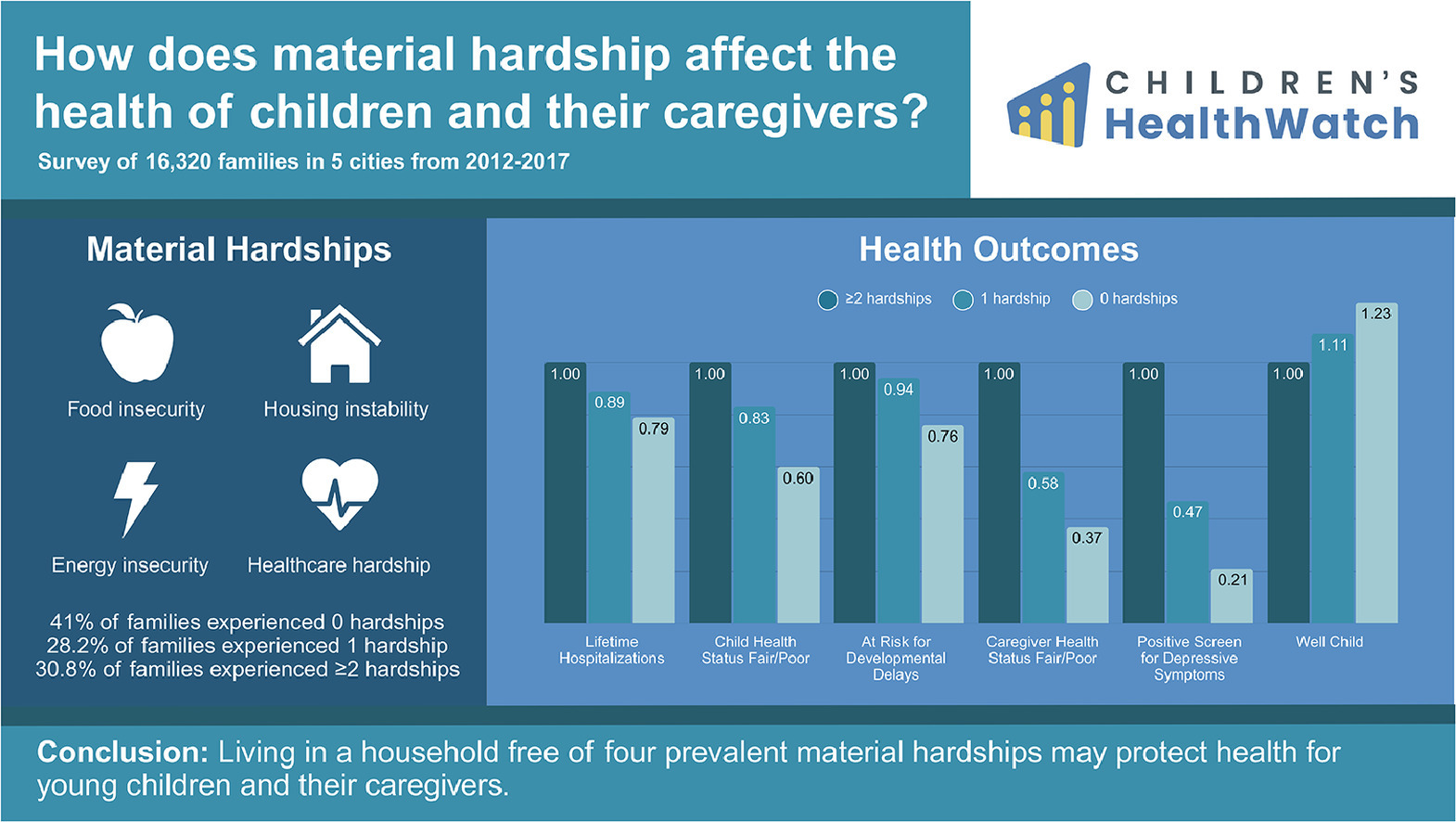
Among 16,320 families, 41.0% experienced 0 hardships, 28.2% 1 hardship, and 30.8% ≥2 hardships. After covariate control, compared to children with ≥2 hardships, children from hardship-free households experienced lower adjusted odds of lifetime hospitalizations, fair/poor health, fair/poor oral health, developmental risk, and higher odds of wellness, and caregivers had lower odds of fair/poor health and depressive symptoms. Compared with ≥2 hardships, children and their caregivers from households with 1 hardship showed lower adjusted odds of lifetime hospitalizations, fair/poor health, fair/poor oral health, and higher odds of wellness, and caregivers had lower odds of fair/poor health and depressive symptoms.
Conclusions
Living without material hardships may contribute to positive physical and developmental/behavioral health among children and caregivers. Findings support the importance of policies to decrease material hardships among families with low incomes.